Science & Technology

Breaking Down the Gut-Brain Divide

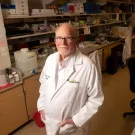
Erkin Şeker, a professor of electrical and computer engineering at the University of California, Davis, and his lab have developed a microfluidic device that allows researchers to model the neuronal communication between the gastrointestinal tract and the central nervous system, or CNS. It’s an essential advancement in an interdisciplinary, collaborative research initiative helmed by Şeker to understand the gut-brain axis — and eventually to improve outcomes for conditions related to the gut, like Crohn’s disease and mental health issues.

Boosting Research for the Brain and Planet

Donors are advancing the College of Engineering’s Next Level strategic vision to create a better world for all through socially responsible engineering, inspiring education and transformative research. Alum Susan Ellis ’78 and her husband, Mark Linton, have given $1 million to the college to create graduate student fellowships at the Center for Neuroengineering and Medicine and for UC Davis’ Sustainable Cities, Sustainable Campuses initiative.

Improving Our Lives Through Design

by Greg Watry

Inside an L-shaped room in Cruess Hall, surrounded by workstations, 3D printers, sewing machines, tools and mannequins wearing prototypes, Gozde Goncu-Berk builds the future. It’s a future of many possibilities, but those possibilities share a common thread. They’re all based around humanity’s increasing use of wearable technology.

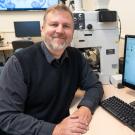
Professor Erkin Seker Receives Distinguished Teaching Award – Graduate and Professional Teaching

by Dateline Staff

The Academic Senate and Federation have presented their top academic honors for 2024, and the faculty recipients are being showcased not just for their expertise, but also for their teaching, mentorship and public service.

In all, 15 faculty members have received awards from the two groups at UC Davis, including Center for Neuroengineering and Medicine Co-Director Erkin Seker, PhD. 

Bestselling Book Blends Science and Storytelling to Explain How Memory Shapes Our Lives

by Alex Russell

Charan Ranganath admits he can be forgetful. This is true of most people, but most people are not leading experts on the neuroscience of human memory.

“Everybody knows I have a terrible memory,” said Ranganath, a professor of psychology and neuroscience at UC Davis, “and yet I got a Ph.D. and I publish papers all the time. I'm totally functional, so maybe the expectations we have are just wrong.”

Creating His Own Path

John Morrison was such an early expert in the field of neurobiology that the major didn’t even exist at his university when he was an undergraduate. Now at UC Davis, he’s a leader in the field and continues to play a central role in the research community.

$15 Million Grant Will Support Study on the Role of the Thalamus in Cognitive Control and Schizophrenia

When it comes to brain anatomy, the thalamus occupies a humble position. It sits at the top of our brainstem — an apparent vestige of our reptilian past — and is dwarfed by the massive, wrinkled cerebral cortex, which sits above it. The cortex is often credited as the throne of human intellect. But a team of researchers across the country, with UC Davis led by W. Martin Usrey, sees the thalamus as a critical coordinator of our thoughts and perceptions – and pivotal in human disease.

College of Engineering Next Level Research Awards

by College of Engineering Communications

The College of Engineering Next Level Research Awards fund near-term research, conferences, symposia and planning for bold ideas that align with our strategic research vision. Funded projects are interdisciplinary, have the potential to advance national leadership and secure extramural funding, and articulate clear near-, mid-, and long-term goals.

Another round of funding will be available in 2024. A request for proposals will be announced in spring quarter. 

Faculty Spotlight: Professor Jochen Ditterich, PhD

Jochen Ditterich, PhD is a Professor in the Department of Neurobiology, Physiology and Behavior in the College of Biological Sciences and a core member of the Center for Neuroscience. Since March of this year, he is also one of the Co-Directors of the Center for Neuroengineering and Medicine, after having served on its Steering Committee since the center’s inception.